Advanced Inventory Management is a set of additional Back Office features that helps you track stock levels more efficiently, monitor inventory changes, and calculate business profitability with greater accuracy.
Note: Advanced Inventory Management is available on paid subscriptions only. To activate a subscription or start a trial period, go to Settings → Billing & Subscriptions in the Back Office.
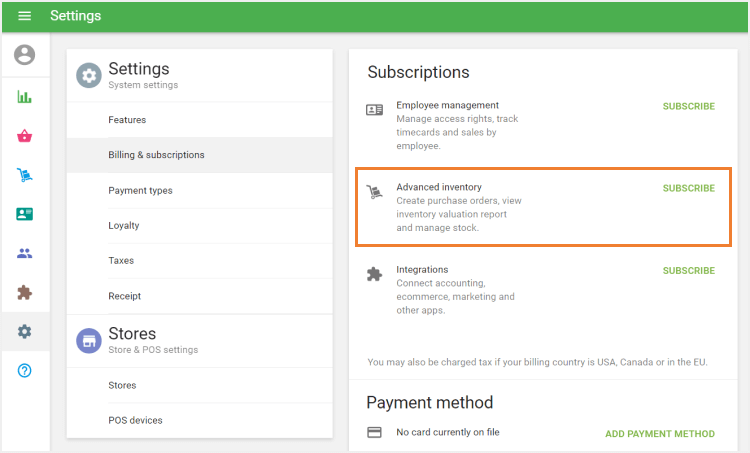
Once activated, the Advanced Inventory menu will appear in the Back Office.
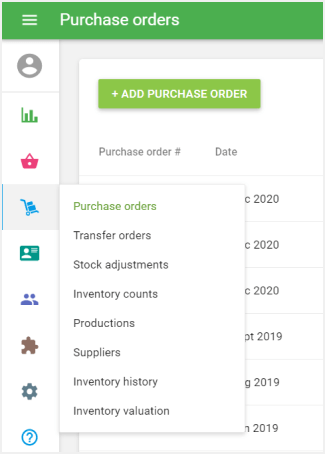
Advanced Inventory Menu
The Advanced Inventory menu includes the following sections:
- Purchase Orders — Create and save product supply orders, send them to suppliers, receive products, and store supplier information in the system.
- Transfer Orders — Distribute items between stores. Ideal for multi-store owners who need to manage stock across locations.
- Stock Adjustments — Modify stock quantities for individual items and record the reason for each adjustment.
- Inventory History — View a complete log of all inventory changes, including transfers, purchase orders, and adjustments.
- Inventory Valuation Report — Get a clear picture of the total cost of your current inventory and the potential profit from selling it.
- Inventory Count — Reconcile expected and actual inventory for all or selected items, identify shortages or surpluses, and maintain records for each count.
- Printing Labels — Print labels for items directly from the Items list. Each label can include the item name, SKU, price, and barcode. Barcoded labels enable scanning to add items to a ticket.
- Production — Track the inventory of produced items separately from their components. This is particularly useful for items prepared in advance rather than made to order — for example, baked goods in a bakery. Produced items can be moved between stores using inventory adjustments and inventory counts.
How Advanced Inventory Affects Items
Enabling Advanced Inventory Management changes both the appearance of the Item form and how item costs are calculated.
Setting Up an Item
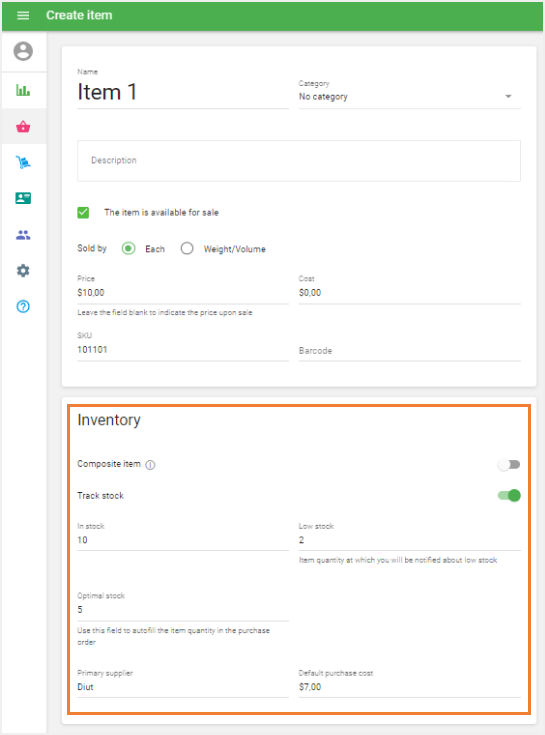
When creating a new item, you can enter the Price and Cost as usual. However, once you enable Track Stock in the Inventory section, additional fields become available:
- Primary Supplier — Assign a default supplier for the item from your supplier list.
- Default Purchase Cost — Set the standard cost used when ordering from the primary supplier.
Average Cost Calculation
After you save the item and reopen it for editing, the Cost field is replaced by a read-only Average Cost field.
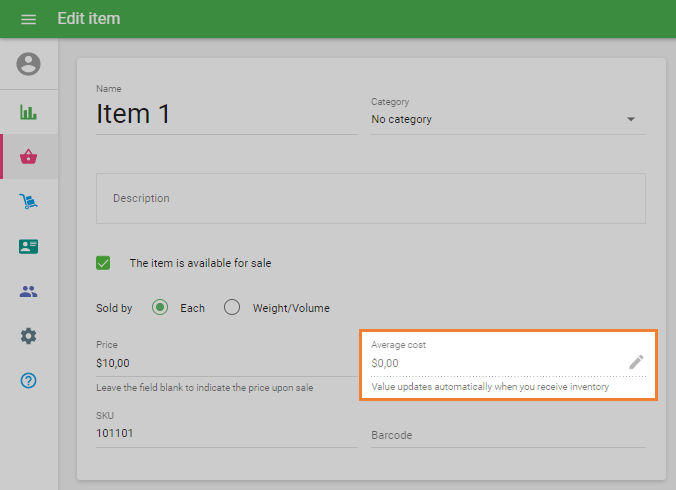
This value is calculated automatically each time you receive items through the Advanced Inventory functionality, using the following formula:

Variable | Description |
|---|---|
| Quantity in stock before receiving new items |
| Quantity of newly received items |
| Average cost before receiving new items |
| Cost of the newly received items |
The resulting Average Cost is used across all reports and profitability calculations in the system.
See also:
How to Work with Purchase Orders and Suppliers
How to Work with Transfer Orders
How to Work with Stock Adjustments
Inventory History and Valuation Report
How to Work with Inventory Count